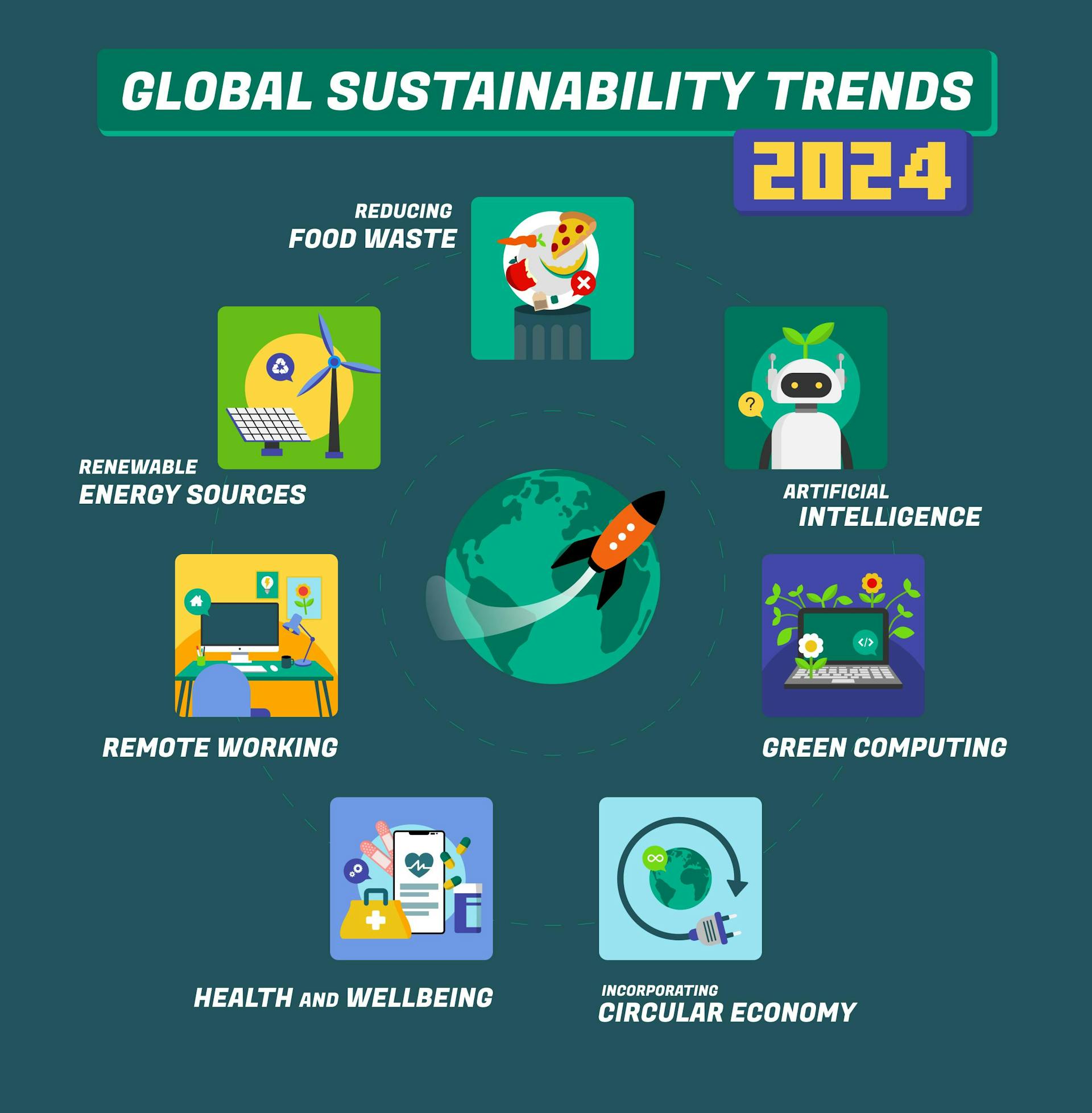
The World Is Shifting Fast- Major Trends Shaping The Future In The Years Ahead
Top 10 Remote Work Trends Transforming How We Work Modern Workplace By 2026 And 27The way we work has evolved more rapidly in the past few decades than in the previous several decades. Flexible and remote working arrangements have evolved from emergency solutions to permanent structures, and their ripple effects are visible across organizations in cities, professions, and communities. For some, the change has been liberating. However, for others, it has caused serious questions about productivity in the workplace, culture, and growth. However, it is clear that there's no turning back to the default of the past. Here are 10 most popular remote work trends that are transforming the modern workplace in 2026/27.
1. Hybrid Work Takes On The Dominant ModelThe issue of working from home or fully in-office work has come to a compromise ground. Hybrid workplaces, where employees share their time between home and the physical workplace is the preferred pattern across many knowledge-based businesses. Its specifics are varied between structured two or three-day requirements for office work to totally flexible arrangements that are based around work needs of teams. What many companies have recognized is that rigid five-day office hours are becoming increasingly difficult to justify for employees who have shown they can get results from any location.
2. Asynchronous Communication Takes PriorityAs teams become more geographically dispersed and time zones more varied the idea that everyone must be online at the same time is breaking down. Asynchronous communication, in which messages such as updates, messages, and decision-making are documented and responded to according to the time of each individual is now a real organizational priority, not as an afterthought. Tools built around async workflows are gaining ground, and the shift of culture to empowering people to manage their own time rather then watching their online activity is gaining momentum.
3. AI-powered productivity tools reshape daily WorkThe incorporation of AI into common tools of work has been more rapid than many thought. From meeting summaries to automated task management to AI writing aids and intelligent scheduling. The new tools available to remote workers in 2026/27 appears completely different from even two years ago. The most significant change isn't a single tool but the overall effect of AI managing the administrative portion of the job, allowing workers from having to do those tasks that really require human judgment and creativity.
4. It is when the Home Office Becomes A Serious InvestmentA decade into the widespread use of remote working The improvised kitchen table arrangement is now giving way to specially-designed home offices. Employers and workers alike are now recognizing the work space as an infrastructure that is worth investing in. Ergonomic furniture, professional electrical lighting, and high-quality audio and video devices are more of a standard than high-end. Some employers offer house office allowances a part as a benefit plan acknowledging that a well-equipped remote worker is an efficient employee.
5. Digital Nomadism Gains Mainstream LegitimacyWhat was once a lifestyle choice for those who work for themselves and self-employed workers is becoming a accepted working method employed by established businesses. An increasing number of employers now offer location-flexible policies that permit employees to work from various countries for longer periods, provided tax and conformity conditions are in place. The infrastructure to support this kind of work from co-working groups to nomad visa programmes that are provided by a growing number of nations, continues to expand and develop.
6. Remote Work Culture is a necessity for deliberate DesignOne of the most consistent challenges with distributed work is maintaining a cohesive team culture in a situation where people rarely or never have physical space. Organisations in the leading positions are learning that culture in remote environments isn't something that happens naturally. It needs to be created. This means intentional onboarding processes as well as regular touchpoints that are structured, online social rites of passage, and clearly defined frameworks for recognition and improvement. Companies that view culture as something that can only be experienced in offices are constantly losing the ground when it comes to retention and engagement.
7. Cybersecurity For Remote Workers Gets Tighter SignificantlyThe expansion of remote work significantly increased the number of attack points open to cybercriminals, and the response from organizations has been very positive. Zero-trust security strategies, compulsory VPN use, endpoint monitoring and multi-factor authentication have become essential requirements, rather than the latest measures. Security training for employees has evolved into more of a regular requirement than being a single induction and reflects the fact that remote workers working outside of their corporate network's boundaries pose the risk of vulnerability as well as a potential first layer of protection.
8. A Four-Day Work Week Gains TractionA number of pilot programmes that are testing a five-day working week have shown consistently good results across a variety of sectors and countries. increasing numbers of companies are moving from trial to permanent adoption. It is the premise that output and focus are important much more than the number of hours spent, fits in with the traditional remote working concept. For employers competing for candidates in a job market where flexibility is an absolute priority, the four-day week is evolving from an initial trial into a reliable way to differentiate.
9. Performance Measurement shifts to OutcomesManaging remote teams by observing the activity of employees, tracking copyright times and monitoring screen usage has proved impractical and untrustworthy. The shift to outcome-based performance management, in which employees are rated based on what they achieve rather that how their appearance of being busy in the workplace, is among the more significant cultural changes remote work has grown faster. This calls for clearer goal-setting, more frequent check-ins, as well as managers who are comfortable directing without being under direct supervision. In addition, it demands more accountability from employees in return.
10. Psychological Health And Boundaries Become Organisational ResponsibilitiesThe blurring between home and work lives that remote working has the potential to cause has brought boundaries and mental health onto the agenda of business. Burnout or isolation, as well as constant work patterns are recognized as threats rather than personal failings, and employers are being expected to tackle them structurally. Working hours policies, requirements for right-to-disconnect, access to mental health assistance, and proactive management training are now standard components of what a responsible remote-friendly employer will look like by 2026/27.
Work's transformation can be ongoing and inconsistent, with different fields, roles and even individuals experiencing the changes in various ways. What these trends do share is the same direction: toward greater flexibility, targeted communication, and fundamental rethinking of the what is to be productive. Organisations that engage seriously with the process of rethinking are making workplaces worth being a part of. To find further information, browse some of the most trusted kaupunkihetki.fi/ to read more.
 Top 10 Digital Learning Changes Changing The Way We Learn In The Near Future
Education is in the midst of a shift that is as significant as any other time in history, driven by technology, which is change not just how education can be delivered, but also what means to learn, what is valuable to learn, and who can benefit from it. The learning environment of 2026/27 is located at the intersection of artificial intelligence, credential disruption, shifting labour market demands and the growing realization that the old model of education that is based on frontloading followed by decades of static knowledge cannot be adapted to this world changing as rapid as the current one. These are the ten most important online innovations in education that are set to revolutionize learning into 2026/27.
1. AI Instructors offer genuinely individual LearningThe idea of personalised education with instruction tailored to the particular pace, learning style gaps in knowledge, as well as expectations of every student has been available for decades without being delivered on a mass scale. AI tutoring systems are making it happen. Platforms that respond in real time to the way an individual learner reacts, pinpoint errors before they get rooted and adjust the difficulty in a dynamic manner and provide explanations of various ways until the learner is producing outcomes of learning which compare favorably with traditional methods of instruction. Its greatest impact lies providing a wider range of the personalised attention that was previously offered only to those who could afford private tutoring.
2. Micro-Credentials and Skills-Based Certificates Gain GroundThe traditional college degree isn't dissolving, but its influence on credentialing has been slipping away. Employers in an increasing variety of industries are putting more significance on demonstrating skills and relevant certificates, as opposed to the form or prestige of the degree that is awarded. Micro-credentials, which are short-focused courses that validate specific competencies, are being issued by technology platforms, universities and professional bodies as well as employers themselves. The problem is to create the infrastructure to ensure that these credentials are understandable real, valid, and trustable across the boundaries of an organisation. Blockchain-based credential verification as well as the growing employer acceptance of specific platforms certifiable credentials are both contributing towards solving this problem.
3. Lifelong learning becomes a professional EssentialThe accelerating pace of change in almost every field is a sign that skills and knowledge acquired in education at the beginning of their careers have an elongated useful time than at any previous point. Continuously upskilling and reskilling is not optional anymore in the pursuit of a dream career, but prerequisites for anyone wanting remain relevant in a work market that is transformed by automation as well as AI more quickly than any other technological advancement. Online learning platforms provide an essential infrastructure for continuing professional advancement is occurring, and the market for adult education is growing rapidly as employers, employees and the public sector all invest in building it.
4. Immersive Learning Environments with VR and SimulationSimulation-based learning and virtual reality are becoming more than just a novelty and transforming into real-time pedagogical efficiency in certain domains. Medical students practice the procedures they will use in virtual environments before touching a patient. Engineering students dismantle, then rebuild virtual machinery. Learners of languages practice conversations in authentic scenarios. The evidence for immersion learning in high-risk skills development is growing and the price for the necessary hardware is falling. In learning environments that are where the cost of making mistakes in the real world is high, or where access to a real-world setting is not available, immersive simulation has proven its value.
5. Social and Cohort-Based Learning Reclaims GroundThe early online learning experience was mostly individual, the learner was alone in their work. The recognition that much of what makes education valuable is social, the discussion, debate, peer feedback, shared struggle, and relationship-building that happen between people learning together, has driven investment in cohort-based formats that recreate something of the classroom dynamic in an online context. Programs that rely on live-streamed sessions of peer collaboration, group projects, and shared achievements are delivering higher completion rates and learning outcomes much higher than self-paced solo formats. The social aspect of learning is becoming more and more recognized as a defining feature rather than a condition of background.
6. The number of employers who provide education is growing significantly.Bewildered by the disparity between the educational outcomes that traditional schools provide and what the students actually need the most large employers are investing directly in creating the learning programs which help them acquire the skills they require. Academic academies that are internal, partnerships with universities and online platforms learning pathways, and direct courses for certification that are designed in collaboration with the industry are all gaining momentum. The distinction between education and employment is becoming more fluid, as learning and education are increasingly being integrated into every stage of life, instead of being restricted to the beginning. Students who receive a formal education from employers usually provides direct paths to work that traditional degrees do not guarantee.
7. Learning Analytics Facilitate earlier and Effective InterventionThe information generated by online learning platforms gives a granular picture of how individuals learn, where they struggle in learning, what motivates them and what causes them to drop out, that no traditional classroom could ever match. Learning analytics tools make this data actionable, allowing instructors and designers of platforms to spot students at risk of losing interest early enough to intervene. It also helps to identify what types of pedagogical practices and content yield the most effective outcomes for the learners in which profiles, and to improve the course design with the help of aggregate evidence rather than intuition. When properly used, analytics aid in making online learning more relevant and effective over time.
8. Language Learning is Enhanced By AI Conversation PartnersThe acquisition of language requires years of practice in realistic situations and this has traditionally been the hardest thing for self-directed learners access. AI conversing partners who respond in real-time, adapt to the individual's needs, correct errors constructively, as well as simulate a wide array of click for source scenarioal situations are transforming the possibilities for self-directed language learners. The effectiveness of AI-powered language training has reached a level where you can have meaningful conversational skills accomplished without the aid of a human partner, significantly increasing opportunities for effective language learning for the hundreds of millions of people in the world who want it.
9. Content Abundance Grows In Value The Curation and GuidanceThe amount of educational content available online is now so massive that the problem of lack of education has been fundamentally altered. The challenge isn't access to content. It's the capability to recognize what is worth learning, at what sequence, and with what supports. The most sought-after online learning experiences for 2026/27 will provide not only content but also contextualization, curation, pathway design, as well as expert instructions to help students navigate all the available information efficiently. The educators and platforms who thrive are more often those who assist learners in learning to learn, not only those that can efficiently deliver information.
10. Education Technology is under scrutiny Over ResultsThe rapid growth of the industry hasn't been accompanied by systematic evaluations of how its products produce the results they claim for learning. The growing number of studies and regulatory interest, as well as consumers' skepticism are demanding higher standards of verification from learning platforms, credential programmes as well as AI tutoring tools. The most credible players in the market are reacting by investing in independent result evaluation, transparent disclosure of employment and completion data, and a design which prioritizes genuine learning over engagement metrics. Pressure to be accountable is a positive thing for the business sector whose credibility is based on the reality of delivering what it claims to deliver.
Education has been a mirror of society and a mechanism for changing it. The current trends in online learning 2026/27 illustrate a global society that is currently focusing on what individuals need to know as well as how they learn best, and who should have access to the tools that allow learning. The trend is generally encouraging in the direction of greater accessibility to personalisation, greater accessibility, and an honest assessment of what education is actually about. The main challenge is to ensure the process benefits everyone rather than simply making existing advantages more efficient to accumulate. For additional insight, visit a few of these reliable britishnewsdesk.co.uk/ for more detail.